Inside the Collagen Matrix of Saddlery Leather
Vegetable-tanned bridle leather is not a solid, inert sheet. It is a layered network of collagen fibres formed into the corium, the strong middle portion of the hide. Under magnification, those fibres appear as bundles that cross and interlock, with tiny spaces between them. When the leather is properly conditioned, the fibres can glide against one another as the bridle, girth billet, or saddle flap bends under load. That internal movement is what allows sound leather to flex repeatedly without cracking, tearing, or becoming harsh against the horse.
Different dressings do not perform the same job. A thin oil can move into dry fibre bundles, a grease can remain in the corium and provide body, while wax mainly establishes a protective film near the grain. Treating every conditioner as an interchangeable paste is particularly risky on load-bearing tack. For a useful reference on how light oils and heavier greases behave differently in leather maintenance, consult this detailed leather care guide. The practical distinction is simple: deep nourishment supports flexibility, while surface protection limits the entry of sweat, rain, mud, and cleaning moisture.
Liquid Oils and Deep Fiber Penetration
Pure neatsfoot oil is valued in traditional leatherwork because its liquid lipid molecules are mobile enough to travel into dense fibre bundles. Selected plant-derived oils can behave similarly, although their chemistry and oxidation stability vary considerably. In a dry piece of leather, the fibres have lost some of the lubricating material that lets them move smoothly. A very small amount of suitable oil can restore that slip, reducing the sharp resistance felt when a strap is bent or rolled.
The objective is not to make the leather feel wet. Oil should disappear into the structure rather than remain as a glossy film on the grain. Apply it to clean, fully dry leather with a cloth or controlled brush, then allow time for absorption before removing any residue. Heavy application can darken vegetable-tanned leather, soften edges, and alter the original temper, meaning the useful firmness that helps a rein or billet retain its shape. New tack and leather that has not yet settled into its working form should be treated especially cautiously, since early oiling may encourage premature stretching.
Before reaching for liquid oil, inspect the leather under good light and pressure. A dry toe on a boot is a useful general indicator, but on tack the equivalent signs are a pale, thirsty-looking grain, a faintly sharp feel when flexed, or small surface cracks forming at repeated bend points. These indicators suggest internal dryness rather than a need for more shine.
- Use liquid oil sparingly on genuinely dry, firm leather that needs restored flex.
- Prioritise high-flex areas, but keep oil away from padded panels and areas where excessive softening could change fit.
- Allow complete absorption, then wipe and buff before the tack returns to service.
- Test an inconspicuous area first, especially on pale, vegetable-tanned, or highly finished leather.
Animal Fats and Structural Nourishment
Traditional saddlery dubbins often contain tallow, natural lard, or related solid and semi-solid animal fats. Their importance lies in their staying power. Unlike a very light liquid oil that can migrate quickly through a porous hide, a grease dressing tends to remain suspended in the corium for longer. It fills and lubricates the spaces around the collagen bundles while preserving a degree of substance in leather that must tolerate repeated tension, compression, and handling.
That makes grease useful for robust work tack, exposed billets, and leather that needs moisture resistance as well as flexibility. It is not automatically the right answer for every bridle or saddle. A grease can soften leather more noticeably than a thin conditioning cream, reduce a crisp edge, and darken unfinished surfaces. Under riding pressure, properly nourished leather should bend and recover without feeling spongy. Excess grease does the opposite: it reduces resistance, permits stretching around holes, and can eventually compromise the stable relationship between a strap, buckle, and load.
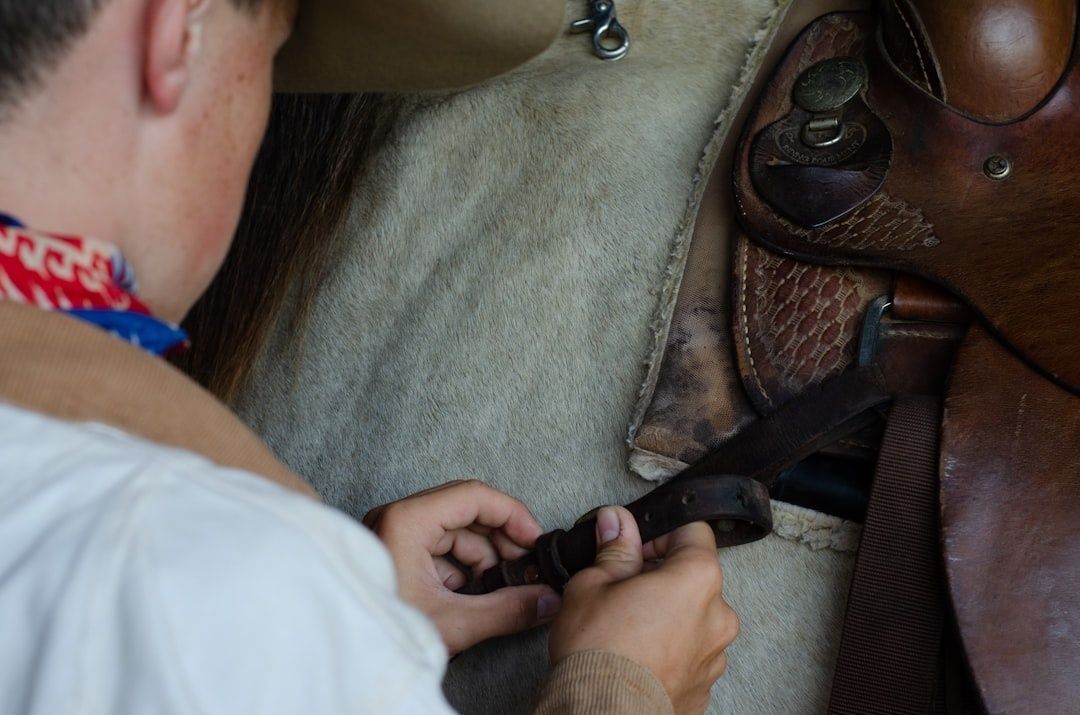
Natural Waxes and External Barrier Defense
Beeswax and other high-melting-point waxes behave primarily as surface materials. They soften with warmth during application, settle into the grain and shallow pores, and then firm as the leather cools. Beeswax offers a useful combination of adhesion, water repellency, and abrasion resistance. A balm containing beeswax and castor oil, for example, is designed to combine a modest conditioning effect with a water and stain resistant finish, as described in this beeswax leather balm specification.
Wax does not replace the internal lubrication of dry collagen fibrils. Its molecules are too physically substantial to travel deeply through the fibre network in the way a mobile liquid oil can. Instead, wax helps keep horse sweat, rain, splashed water, and mud from entering through the grain. That barrier is valuable on reins, bridles, stirrup leathers, and exposed saddle leather, provided the surface is clean before application. Waxing over grit traps abrasive particles against the grain.
The most useful workshop balms balance oil and wax rather than relying on either in isolation. The oil component can soften and lubricate the upper fibre structure, while the wax component forms a breathable, flexible shield. Breathability still matters because leather is hygroscopic: it exchanges small amounts of moisture with its environment. A thick, repeatedly layered wax coating can leave a tack surface slick or mask early cracking, so application should remain thin enough for the grain and its condition to be assessed.
- Choose wax for routine weather shielding after the leather is clean and appropriately conditioned.
- Use a very thin coat on reins and areas requiring secure hand feel.
- Warm a firm balm between the fingers rather than applying a thick lump to the grain.
- Buff excess wax away so the surface remains supple, not sticky or sealed under a heavy coating.
Comparing Oils Fats and Waxes at the Bench
At the bench, the choice should be based on the leather”s condition, construction, and job. A saddle flap that has become dry at a fold does not need the same treatment as a bridle used daily in wet weather. Nor should a soft, already flexible billet receive the same amount of dressing as a rigid strap that has been stored in a hot, dry tack room.
| Material | Absorption depth | Weather resistance | Softening impact | Main risk |
|---|---|---|---|---|
| Liquid oil | Deepest, depending on hide and finish | Limited alone | Moderate to high if overused | Stretching, darkening, saturation |
| Animal fat or grease | Moderate and persistent | Good | Moderate | Heavy feel, altered temper, residue |
| Natural wax | Mostly surface level | High as a barrier | Low | Build-up, slickness, masked defects |
Under tension, oil-treated leather usually gains flexibility first, while grease-treated leather retains more lasting lubrication in the corium. Wax-treated leather resists moisture and surface abrasion but cannot correct internal dryness on its own. For dry and rigid leather, begin with a controlled internal conditioner. For sound leather exposed to rain or sweat, use a light wax shield. For heavily used, substantial leather that must resist wet conditions, a sparing grease treatment may be appropriate, followed by removal of excess.
The Hidden Peril of Over Oiling Stitch Channels
Over-conditioning is not merely untidy. When leather becomes saturated, the collagen network loses some of the firm resistance that supports holes and edges. A billet can begin to feel soft and spongy, and the holes may elongate under girth tension. That movement can alter saddle stability and create uneven loading around the tree and panels. A strap that looks beautifully dark and supple may therefore be less dependable than one with a slightly firmer, natural temper.
Liquid oil also follows paths of least resistance. Awl holes, fold lines, skived edges, and stitch channels can draw it inward by capillary action. Once there, excess oil may soften flax thread and reduce the grip between thread, leather, and stitch hole. Synthetic linen threads are more resistant to some forms of moisture and decay, but they are not a reason to flood the seam. Dirt, sweat, oil, and abrasion can still undermine the thread or the leather surrounding it.
Workshop inspection should include more than a visual check. Press the leather beside the stitch line, flex it slowly, and compare the feel with an unexposed section. Look for enlarged holes, dark halos around stitches, loose thread tension, flattened edges, and a surface that stays greasy after wiping. On a saddle, inspect billet attachments, girth straps, stirrup leather ends, and the areas where the flap folds against hardware. If structural stitching is loose or the leather no longer recovers after flexing, remove the tack from use and arrange a qualified saddler”s assessment.
- Check whether the leather rebounds after a gentle bend rather than remaining collapsed.
- Run a clean cloth along stitch channels to identify transferable oil or grease.
- Compare hole shape on both sides of a billet or strap.
- Inspect for thread fuzzing, slack stitches, cracking, and damp or sour odours.
- Do not attempt to hide structural wear beneath wax or dark dressing.
Building a Purposeful Tack Room Conditioning Protocol
A sound seasonal routine uses the least aggressive treatment that solves the actual problem. After riding, remove sweat and grit with a suitable damp cloth, then let the leather dry naturally away from radiators, direct sun, and forced heat. Once dry, assess the grain and flex points. Use liquid oil only where internal dryness is evident, use grease on appropriate robust leather when longer-lasting body and moisture resistance are required, and reserve wax for a thin external shield.
- Clean the tack carefully, paying attention to buckle folds, billet holes, and stitch channels.
- Dry it completely in a cool, ventilated place before conditioning.
- Test the selected product on a hidden area and wait for the colour and feel to settle.
- Apply a small amount to the leather, not directly into seams or holes.
- Allow absorption, wipe away residue, and buff any wax lightly.
- Flex and inspect the tack before every demanding ride or competition.
The most reliable tactile check is controlled flexing. Healthy leather should feel resilient, with enough suppleness to follow movement but enough body to resist stretching. It should not feel brittle, wet, gummy, or permanently creased. Regular inspection protects more than the leather itself. It helps preserve billet length, bridle adjustment, rein feel, saddle stability, and the horse”s comfort under work. Precise conditioning, like precise saddle fit, is a matter of balance. Apply what the fibres need, shield what the surface faces, and leave sound leather largely undisturbed.